
Key Takeaways
- An anger management class is a structured, skill-building education program — not therapy, not counseling, and not punishment. You learn specific techniques for recognizing and managing anger, and you practice them.
- Most programs follow a cognitive-behavioral model. The federal curriculum published by SAMHSA runs 12 weeks and is built around trigger awareness, early warning signs, and concrete response strategies.
- Your court order sets your length, not the provider. Common assignments are 12, 16 and 26 weeks, and some orders run up to 52 weeks.
- “Court-approved” is jurisdiction-specific. Before you pay for anything, confirm with the court or your probation officer that the format and length you are enrolling in will be accepted.
- The certificate matters as much as the class. It needs your legal name, the number of sessions completed, the dates, and verifiable provider contact information.
If a judge has just told you to complete anger management, you probably left the courtroom with a deadline and very little detail. Most people in that position are searching for the same two answers: what actually happens in these classes, and which ones will satisfy the court.
Both are fair questions, and neither is complicated once someone explains it plainly.
An anger management class is a structured educational program that teaches you how to recognize anger earlier and respond to it differently. It is not a psychological evaluation, and it is not a setting where you are asked to confess to anything. It is closer to a skills course than to a therapy session.
This guide covers what a class actually involves week to week, how long courts typically order, what makes a program acceptable to a court or probation department, and how to verify that before you spend money. Valley Anger Management has run these programs for 17 years and worked with more than 13,000 clients across all 50 states, so the answers here reflect what courts and probation departments actually ask for in practice.
What an Anger Management Class Actually Is
An anger management class is a structured education program built around emotional awareness and practical skills. The goal is to give you tools you can use in the moment — at work, at home, in traffic, in the situations where things have gone wrong before.
It helps to be clear about what it is not. It is not individual therapy, where the focus is on exploring your history. It is not a psychiatric assessment. And it is not designed as punishment, even when a court is the reason you are attending.
Most credible programs are grounded in cognitive-behavioral methods. The idea behind that approach is straightforward: anger follows a predictable sequence, and if you can interrupt the sequence early enough, you get to choose your response instead of reacting automatically.
Three groups of people typically enroll:
- Court-mandated participants — referred by a judge, probation officer, attorney, or the Department of Children and Family Services.
- Employer-referred participants — sent by a manager or HR department, often following a workplace incident.
- Self-referred participants — people who enroll on their own because a pattern in their relationships or work life has become hard to ignore.
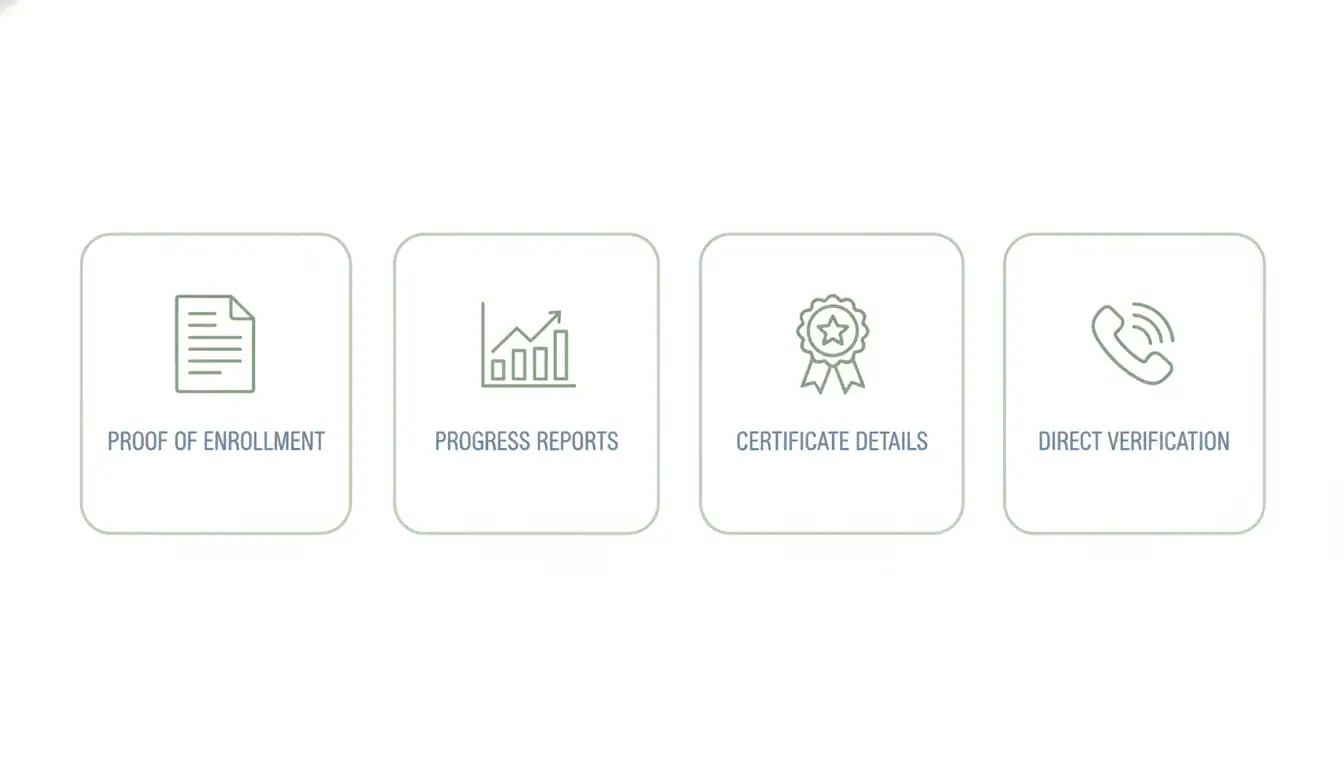
The curriculum is largely the same for all three. What changes is the documentation. Court-mandated participants need proof of enrollment, progress reports, and a certificate; someone enrolling voluntarily usually needs none of that.
What Actually Happens in a Session
This is the question most people want answered before they enroll, and the honest answer is that a session is far more ordinary than most people expect.
Most programs open with a brief intake or assessment. This is a conversation about your situation and what the court has required — it is administrative, and at most providers it does not count as one of your required classes. Ask about that specifically, because it affects your timeline.
A typical class then follows a consistent rhythm: a check-in, a topic for the week, discussion and exercises, and a skill to practice before the next session.
Across a full program, the skills generally cover:
- Trigger identification — learning which situations, people, and pressures reliably set off your anger.
- Physical early warning signs — noticing the body’s signals, such as a tightening jaw or rising heart rate, before the thought catches up.
- Cognitive techniques — examining the interpretation driving the reaction, which is often where anger is actually generated.
- Communication under stress — stating a position clearly without escalating the exchange.
- Relapse prevention — planning for the situations you already know are difficult.
Group sessions are the standard format, and for most people the group turns out to be the useful part. You are not asked to perform remorse or share more than you want to. You are asked to participate.
One thing worth saying plainly: facilitators are not there to judge you. Most participants find the tone more matter-of-fact than they expected.
How Long Courts Order: 12, 16, 26 and 52 Weeks
Program length is the single most common source of confusion, and it is also the easiest thing to get wrong in a way that costs you.
Your court order determines your length — the provider does not. If your paperwork says 26 weeks, a 12-week program will not satisfy it, no matter how good the program is.
Two details cause most of the problems we see.
First, some orders are written in hours and others in sessions or weeks. These are not interchangeable. Read which one your order uses and match it exactly.
Second, courts generally expect classes to be completed on a weekly schedule rather than compressed. Finishing 26 sessions in six weeks is not usually accepted as equivalent to 26 weeks, even though the session count matches.
If your paperwork is unclear, ask your probation officer or the clerk before enrolling. That one phone call prevents most compliance problems.
What Makes a Program Court-Approved — and How to Verify It Before You Pay
“Court-approved” gets used loosely in this industry, and acceptance is ultimately decided by your jurisdiction. A program that satisfies a court in one county may not satisfy a requirement in another.
Programs that courts and probation departments generally accept share four characteristics:
- A recognized curriculum — typically cognitive-behavioral, often modeled on the SAMHSA anger management manual, which is the federal reference standard.
- Qualified facilitators — licensed or certified counselors with relevant credentials.
- A verifiable certificate — carrying your legal name, session count, dates, and provider contact details.
- Provider verifiability — someone the court can actually call to confirm your attendance.
Before you pay, ask the provider four questions:
- Do you provide proof of enrollment I can give the court right away?
- Do you provide progress reports during the program, and how much notice do you need?
- What exactly appears on the certificate?
- Will you verify my attendance directly if the court contacts you?
Treat any provider claiming universal or guaranteed acceptance with caution. No provider controls what an individual judge accepts. A program can be designed to meet court requirements and be widely accepted — that is an accurate claim — but the verification step is still yours to complete. California’s court self-help resources are a reasonable starting point if you are unsure who to ask.
Live Online, Self-Paced or In Person
Format flexibility is genuinely useful when you are balancing work and a court deadline, but the format has to match what your order allows.

Live online classes are instructor-led sessions held at a set time, usually over Zoom. Because attendance is tracked in real time and a facilitator is present, they are the closest equivalent to in-person classes and are the most widely accepted online option. Valley Anger Management runs live Zoom classes four times a week, including separate men’s, women’s, and coed groups.
Self-paced online courses let you work through the material on your own schedule. This suits employer referrals, personal development, and some court orders — but not all of them, and some courts specifically require live participation. Check before enrolling, not after. Our self-paced online courses are the right fit when your order permits them.
In-person classes remain the default expectation in a few jurisdictions.
If your order does not specify a format, live online is usually the safer choice, simply because it satisfies the widest range of requirements.
The Paperwork: Certificates, Reports and Deadlines
The class is only half of what the court is asking for. The documentation is the other half, and it is where avoidable problems tend to appear.
Enroll quickly. Many orders carry an enrollment deadline — often within a few weeks of sentencing — separate from the completion deadline. Missing it can count as non-compliance on its own, even if you would have finished the program on time.
Keep your own records. Note the date and time of every session you attend. Providers keep attendance records, but having your own copy costs nothing and has resolved more than one dispute.
Request reports with notice. If your probation officer needs a progress report by a particular date, give your provider reasonable warning. Same-day requests are difficult for any provider to fulfill properly.
Check your certificate before you file it. It should show your legal name exactly as it appears on the court order, the number of sessions completed, the dates, and the provider’s contact information. A certificate issued in a nickname or with a mismatched name is a common and entirely preventable delay.
At Valley Anger Management, certificates are issued in your legal name at no extra charge once you complete your required sessions. There are no certificate fees, materials fees, or long-term contracts.
Frequently Asked Questions
What is the difference between an anger management class and therapy?
A class is structured group education focused on teaching specific skills over a set number of sessions. Therapy is individualized and open-ended, focused on your particular history. Courts almost always order the class, not therapy, and the two are not usually interchangeable for compliance purposes.
Are online anger management classes court approved?
Many courts accept them, particularly live instructor-led classes where attendance is verified in real time. Acceptance depends on your jurisdiction and sometimes on the specific judge, so confirm with the court or your probation officer before enrolling.
How much do anger management classes cost?
Costs vary by provider and format. Valley Anger Management’s live Zoom classes are a one-time $30 enrollment fee plus $31 per class, with no certificate, materials, or contract fees. Self-paced online courses are priced separately.
What happens if I do not complete the program by my deadline?
Non-completion is typically treated as a violation of your court order and can result in fines, extended probation, or further court consequences. If you are at risk of missing a deadline, contact the court or your probation officer before the date passes rather than after.
Do I need anger management if my offense was not violent?
Sometimes. Courts order anger management for a range of situations, including property damage, harassment, and verbal altercations. Your order is what determines the requirement.
Can I choose my own provider?
Usually yes, provided the program meets the court’s requirements for curriculum, length, and documentation. Some jurisdictions maintain approved-provider lists, so ask whether yours does.
Getting Started
An anger management class is a structured skills program with a clear beginning and end. You learn to spot anger earlier, understand what is driving it, and respond in a way you will not have to explain later. That is the whole of it.
If a court is the reason you are here, the sequence that works is simple: read your order carefully, confirm the required length and format with the court or your probation officer, enroll promptly, and keep your documentation in order.
Valley Anger Management has provided court-approved anger management programs for 17 years, serving more than 13,000 clients across all 50 states. Our programs are accepted by courts, probation departments, the Department of Children and Family Services, and the Board of Registered Nursing, and we have worked with DCFS for nine years.
If you are not sure which program length or format your order requires, call us at 818-704-8116 and we will help you read your paperwork before you enroll.
Recent Post
Anger issues are usually gripped with the vicious circle of [...]